If you think the biggest threat to your retirement is a market crash or picking the wrong investment, think again. Small, everyday financial pitfalls can quietly drain your wealth, add years to your working life, and cost hundreds of thousands of dollars without you even realizing it. In this episode, Joe Anderson, CFP®, and Big Al Clopine, CPA, break down the six biggest financial pitfalls Americans fall into and show you practical ways to avoid these traps before they derail your retirement.
Download the Retirement Readiness Guide:

Important Points:
- 00:00 – Intro
- 01:05 – Your 401(k), Overspending, and Debt
- 08:19 – Healthcare, Home Equity, and Raiding Retirement
- 14:33 – Inflation, Investing Mistakes and Tax Traps
- 21:04 – Action Plan to Overcome Financial Pitfalls
Subscribe to Your Money, Your Wealth® on YouTube!
Transcript:
(NOTE: Transcriptions are an approximation and may not be entirely correct)
Joe: It’s not the big mistakes that blows people’s retirement up. It’s the small little pitfalls that they do and they don’t even know it. That could cost them several years or several hundred thousand dollars. Don’t let that happen to you. Welcome to the show everyone. The show is called Your Money, Your Wealth®. Joe Anderson here. I’m a CERTIFIED FINANCIAL PLANNER®, president of Pure Financial Advisors. And I’m with the Big Man, Big Al Clopine.
Al: Good morning again.
Joe: We’re gonna avoid some pitfalls, Al.
Al: I like it. No one likes to get stuck in pitfalls, so let’s figure out how to avoid ’em.
Joe: Yeah. If you take a look at just these small pitfalls, do you know how much that’s costing you? Up to $243 billion. The pitfalls of just simple financial literacy is a huge issue. What could they be? It could be just some bad habits that you don’t even know that are bad, or maybe some outdated assumptions or just simple. Oversights. These are the pitfalls, but you gotta find the solutions. That’s today’s financial focus.
The Hidden Cost of Treating Your 401(k) as Your Entire Retirement Plan
I’ve seen this pitfall for the last several years where they’re treating their 401(k) as a retirement silver bullet. What people don’t understand though, is that the balance that they see on their statement is not necessarily what they can spend, because guess who wants a piece of that? The IRS. So when you’re doing your strategies, you have to take a look at your overall picture. A huge pitfall. Let’s fix this pitfall right away with the CPA Big Al Clopine.
Al: Alright, it’s a big show today. We got some pitfalls we want to avoid. What are they? What are the solutions and how do we plan around them? So let’s start with where Joe left off, which is the tax problem. The 401(k)s, they’re taxable, right? So you gotta consider ways to make them less taxable, such as tax-free Joe, like a Roth IRA, for example, is a way to have a tax-free retirement.
Joe: Yeah. If you look at your 401(k), there’s several different options today where, before it was pre-tax, it grows tax-deferred. And when you pull it out, that’s when you pay the ordinary income tax. And I think a lot of people will be in a lower tax bracket as they’re pulling those dollars out. But for those of you that have saved a little bit more money, you wanna make sure that you’re diversified and create that flexibility.
Huge solution here. I don’t know where tax rates are gonna go, but if you wanna take that tax risk off the table, get a little bit more diversified. There’s tax-free 401(k) Roth strategies. Maybe even going to Munis and then looking at your brokerage account. There’s some tax-efficient ways to think of that.
Al: Yeah, and I think that’s a big miss, Joe ’cause a brokerage account, so these are assets outside of a retirement account, and if you buy a stock or mutual fund, hold it for at least a year and sell it. Any gains, you pay long-term capital gains, which is a cheaper tax than ordinary income tax.
No Financial Plan, Overspending, and the Silent Drain on Your Wealth
Joe: Alright, here’s a simple one for all of you to do, but most people don’t do it. No financial plan, no financial strategy. Nothing written on paper. So overspending, do you know how much money that you’re spending? I would say that most of us have no clue, right? Except for the engineers out there that have that special spreadsheet. But most of us think we spend X, but we’re probably spending Y. So a little bit of overspending there. Hey, let’s just put it on the credit card. But do we know what our interest rate is or how much that we’re actually paying the credit card companies to use them in their under saving? Because we’re overspending and we’re putting stuff on credit cards. If we get a strategy in place and really focus on the goals, I think it can eliminate our help this quite a bit.
Al: Yeah, and the solution is not really that complicated. It’s creating a financial plan. It doesn’t have to be a complicated plan but think about this. Think about what your retirement goals are, what kind of lifestyle? When do you wanna retire? So then how much do you need to save and spend currently to make that happen? So start taking a look at that. If you got debt, figure out how to start reducing it. Make sure you have an emergency fund, and as we just talked about, don’t forget taxes.
Lifestyle Creep and Why Raises Never Seem to Get You Ahead
Joe: Alright, here’s lifestyle creep. What the heck is that? All right. We’re working hard, right? We wanna get that raise. So we’re working hard, we’re working more. We’re we got that side hustle going, all right, boom. We get that raise, we get that promotion. We feel pretty good. We get more cash in our hands. Guess what? We earn more, but then we spend more, and then, we run outta money. It’s like, damn, now I gotta go work. I gotta work harder. I gotta work harder. All right, good. I got that next promotion, right? I’m earning more, but, oh. Now I want some more stuff, so I spend more, then I run outta that money. Look at this. This is the lifestyle inflation trap.
Al: I mean everyone to some degree goes through that. We’ve all been there and this is just a reminder. Try to get outta there and here’s your solution again, take a look at your spending and break it down into different categories like needs and wants and savings. Start with savings. Try to get up to 20% savings. First, right outta your paycheck, 401(k), 403(b), whatever it may be, and then get into your needs, right? Certain things you need. Rent, mortgage, utilities, that sort of thing. Groceries. And then what’s left over is wants maybe kind of a 50, 30, 20 ratio.
Credit Card Debt Traps and How to Actually Pay Them Off
Joe: Rule number one, pay yourself first. You’re the most important person. Pay yourself first, and then you get used to living off of that net paycheck because what happens? Here’s another pitfall Al. Credit cards.
Al: Yeah, high interest credit card debt is definitely a killer for wealth building. So here’s, look at this little example. $5,000 on your credit card, 20% interest rate, you know, 3% minimum payment, you’re gonna end up paying $2,300 of interest. So that’s about a third of your payment goes to interest. And in some cases, people are paying a 1% or 2% minimum based upon what the credit card allows. They end up paying Joe more interest than principal.
Joe: Way more. There’s easy ways to do this. So it’s like, Hey, I can’t get ahead, or what credit card should I pay off first? Or what loan should I pay off first? You know, so there’s this avalanche way or there’s a snowball, right? So it really depends on your personality. I think I’m more of a snowball kind of guy. Al I think you’re more of an avalanche kind of guy.
Al: I, I am definitely. So that’s paying the highest interest card first. Regardless. Regardless of the balance.
Joe: So yeah, you, let’s say you have five different. Consumer debt, maybe it’s a couple credit cards, a car loan, and then you have maybe a line of credit, whatever it is. So then you line it up, put it on a spreadsheet, and you want that highest interest rate. And so you chip away and try to get rid of that as fast as you can.
Al: Yeah, I don’t necessarily care about those little cards. I wanna get the highest interest highest –
Joe: -and see, I’m the opposite. I’m gonna line up my debt and I’m gonna look at the smallest balance, and then the next smallest, and then the, you know, smallest to largest. I’m gonna line them up that way. And then I’m gonna just knock that one out. Okay. Now I knocked that one out because I feel good. I accomplished something. So if I have a large balance on a high interest rate, I might let that go a little bit more and start knocking off the smallest debt first, because sometimes it’s just like working out or trying to lose weight. You hit that scale and you keep seeing your same weight. You lose interest. It’s like, man, this is never gonna happen. At least he gets some small wins here, some small victories for some people go a long way. Gets you a little bit more excited, gets you motivated to get rid of it.
Al: Yeah, and actually either strategy is good. You just pick the one that works best for you.
Joe: Alright, folks, if you need a little bit more help, if you need some more resources, go to YourMoneyYourWealth.com. Click on our special offer this week. It’s our famous Retirement Readiness Guide. Are you ready for retirement? YourMoneyYourWealth.com. Click on that special offer. It’s our Retirement Readiness Guide. Okay, we gotta take a break. Lot more pitfalls to uncover, but more importantly, the solutions on how to avoid ’em. Don’t go anywhere. The show is called Your Money, Your Wealth®.
Healthcare Costs, Emergency Funds, and Avoiding the Debt Spiral
Joe: Hey, welcome back to the show folks. The show is called Your Money, Your Wealth®. Joe Anderson, Big Al. We’re talking about financial traps that a lot of people are in, and on the surface they look great and they don’t even know that they’re running into one of the biggest traps that could destroy their overall retirement.
We’re gonna find those pitfalls, but more importantly, get you the solutions. But let’s see how you did on that true false question.
Al: A 65-year-old retiring today could spend over $170,000 on healthcare in retirement. True or false? Well, Fidelity does a study every year, I’m guessing, Joe, that’s probably true.
Joe: Very true. $172,000. Now, a 65-year-old retiring today could spend that much. That’s on average. Yeah, there could be a lot more expenditures, and for some, it could be a lot less. A lot less. Here’s the solution. Health savings account. Continue to pile money in those. As you retire, you can tap into those dollars.
Maybe you wanna think about long-term care insurance, right? We’re all going to have probably some sort of long-term stay. It could be very short. It could be very long. Insurance could cover that need, or you could use different assets, you could use your home, or maybe you got a rental property, or maybe you’ve saved enough cash or capital that you put aside to make sure that you can cover that.
Al: But I think one of the easiest or the hardest is diet and exercise it, depending upon how you look at it. And I think that’s an important one, right? We all know we need to eat better. We all know we need to exercise, but particularly as you get older, it can make such a difference in your quality of life. Your lifespan and your health span. So I don’t know, do I go on a run or do I buy the insurance?
Joe: You better go on a run and when you get back, buy the insurance. All right, here’s another trap or pitfall. Looking at this no emergency fund, you get this debt spiral, right? So that happens quite often if you don’t have that emergency fund, it’s like, all right, well here, I gotta put it on the credit card, right? Or maybe I take my cash. And I pay off all my debt, and then something happens though the next day, guess what? I’m back in debt again.
Al: Yeah, it happens all the time. I mean, we’re talking about sometimes it’s little things like a flat tire. Sometimes it’s a little bit bigger, but if you don’t have an emergency fund, you go backwards quickly.
Joe: I mean, what we just talked about, diet and exercise, but having this debt spiral or not necessarily having that safety net right. He creates a lot of stress and financial stress is the worst, right? And then it just derails your overall retirement goals, right?
Al: But here’s the solution, Joe, is make sure you start creating an emergency fund. Sometimes it seems impossible, right? Because your expenses, everything’s being spent. But here’s a couple ideas. You get a bonus. Earmark some of that bonus for your emergency fund. Or as you get a raise, go ahead and designate some of that for the emergency fund. Make a direct deposit from your payroll account or your checking account into the emergency account. And probably the most important thing is to have a separate account so you’re not tempted to spend it.
Misusing Home Equity and Raiding Retirement Accounts Too Early
Joe: Well, here’s another issue or pitfall that people do, is that they use their home equity as maybe that cash reserve. There’s a lot of misuses of equity. You, have your house and it’s like, wow. Look at the appreciation that I have. Yeah, we should dip into this and do some different things. So using that HELOC for. Whatever. So you’re cash out refinancing, but you’re using it for non-essentials. I don’t know. You’re buying that boat that you always wanted or you’re doing different things. Just make sure that you’re re that you understand the consequences by taking money out of your house. we do see a lot of people misuse their home equity.
Al: Yeah, and, I would say, Joe, in a lot of cases we’ve seen people borrow and borrow against their home. Then they get to retirement, and then they’ve got all this debt. So maybe think about it this way. Use your home equity loan very sparingly, right? Use it for home improvements. Or maybe emergencies if you’ve got something that’s over and above Your, your emergency fund, right? Investments, be very sparing on that. Probably don’t buy stocks, maybe if you wanna buy another piece of real estate, but just be careful on debt. And then if you need to consolidate your debt, better to pay it off with a snowball and avalanche method. But in some cases, you might need to borrow just because the balances are high.
Joe: Another pitfall is that we tap those retirement accounts a little bit early. One of the most common I see is that maybe you have an old 401(k) that’s sitting on an employer that may might have $20,000 balance in it, and you’re thinking, Hey, why don’t we go on that family cruise? Or why don’t we buy that new car that we wanted? Or, why don’t we buy the boat? Or let’s spoil the kids. Let’s take the $20,000 out. What is the opportunity cost if you just kept it in the plan or maybe consolidated into your current 401(k) plan or put it into an IRA? Well over a 20 year time period at 6%, I mean, that’s gonna grow at about $64,000. So that $20,000 cruise actually cost you 44,000. I don’t know if a cruise costs 20 grand, but whatever that you bought for that 20 grand, well, it cost you a lot more. And guess what? I’m not even including taxes and penalties because there’s no way that you’re gonna pull 20,000 out tax free and penalty free. If you’re under 59 and a half, you’ll probably get something half of that. So this number is actually a lot higher.
Al: Yeah, Joe, and the solution really is, and when you have debt or when you have a big expenditure, pay that through income. Maybe it’s okay if you have a brokerage account or something like that, but do not use your retirement savings. That’s the key here. Retirement savings is not a good way to go.
Joe: Alright, if you need more help, you know where to go, to YourMoneyYourWealth.com. Click on our special offer this week. It’s our Retirement Readiness Guide. If you want to get ready for retirement, no place to go but YourMoneyYourWealth.com, click on the guide, it’s yours for free. Download it right there in your computer, in the comfort of your own home. When we get back, we got more pitfalls. We got more solutions You don’t wanna miss this. The show is called, Your Money, Your Wealth®.
Inflation Risk, Investment Mistakes, and Why Playing It Too Safe Can Backfire
Joe: Hey, welcome back to the show, folks. The show is called Your Money, Your Wealth®. Joe Anderson, Big Al. We’re talking pitfalls. The small little pitfalls that we’re making and we don’t even realize it. If you’re sitting watching this and you’re like, oh. I’ve already made some of those mistakes. Don’t worry. We got your solutions. If you need more help, go to YourMoneyYourWealth.com. Click on that Retirement Readiness Guide. We can understand that we all make a little bit of mistakes, but there’s solutions to fix them and you don’t wanna wait too long. Go to YourMoneyYourWealth.com. Click on that special offer. Alright, Big Al, let’s go to the true false question.
Al: In 20 years with a 3% inflation rate, your money will lose almost half of its value. True or false? Unfortunately, I’m pretty sure, Joe.
Joe: That’s true. Yeah. And this is where it gets confusing, is that a, I’m approaching retirement. I don’t like the volatility of the overall stock market. I have my nest egg. I don’t wanna lose any money in the nest egg, so I’m gonna go to cash. A hundred thousand dollars over 20 year time period. I’m 65. 85, I got a 20 year time period. Well, if there’s a 3% inflation, the purchasing power of that a hundred thousand dollars, right? Goes to 55,000. So this is why we have to invest and find that portfolio in the first place. Because inflation, I’m just losing money safely. It’s erosion of the dollar over that time period.
Al: Yeah, and a lot of people figured that once they retire, maybe age 65, for example, they want to go much safer. Because they can’t earn it back. But the truth is they may live another 20 years or longer. So you gotta make sure you stay invested, but do it carefully. Have a globally diversified portfolio, low cost, consider volatility, right? What’s gonna make sense in your situation? Consider your time horizon and your risk tolerance. These are all very important things when you’re putting together that right portfolio in retirement.
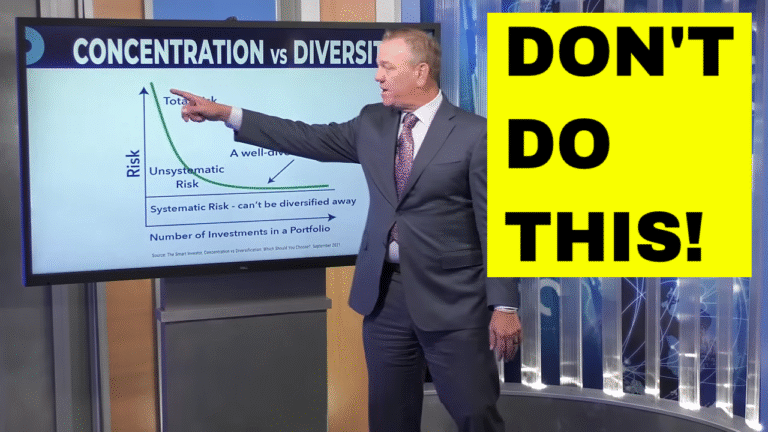
Joe: And I totally get it. Because as I am approaching retirement, I don’t wanna see my portfolio go up and down at value. But there’s always risks in every decision it seems like that we make, especially with our money. So pitfall with your investment risk. So let’s say if I have very low risk in my overall portfolio, I still have longevity risk. I’m not necessarily getting that high return. I don’t see the volatility in the portfolio and it’s like, great, but if I live a long time, is that money gonna come with me or am I gonna run outta money? So then, alright, well if I take on a lot of risk, well then it’s, I got sequence of return risk. So when I’m taking dollars from my portfolio and the market’s down. That’s a disaster because it takes me that much more time to get my money back. ’cause I’m taking distributions in a down market. So you got longevity risk, you got sequence of return risk and there’s a lot more risks in between. You just ha have to identify ’em and then build that portfolio around it.
Al: Yeah. And Joe, a solution would be to kind of a glide path, meaning that your investments will probably change over time. Now, this is not gospel. This is just an illustration, but the illustration is showing as you’re younger, you have more stocks, higher rate of return, but more volatile and less bonds, lower rate of return, but safer. And as time goes on, as you get closer to retirement, you start reducing your stock portfolio, increasing your bond portfolio. In some cases, your bonds may be higher than your stocks. In other cases not. The point is you gotta consider your retirement portfolio. It’s not just cash. You gotta figure out what’s gonna work best for you and your goals.
Joe: Yeah. Here’s the other problem, right? As we approach retirement, we don’t necessarily want to take a lot of risk. We don’t like that volatility in the overall portfolio. Lemme give you a quick example. Let’s go back January, 2003. To December of 2022, you got $10,000 and let’s say you just kept it invested in the s and p 500, right At the end of that time period, that $10,000 grew to 64,000. There was a lot of volatility over that 20 year time period, but at that, the end of the period, hey, I made a pretty good return. But when the market goes up and down, let’s say you miss the best 10 days in the market outta 20 years, you just take out the 10 best days. Because the best days in the market usually happen very close after the worst day. If I just miss 10 days, I lose half of my return. I’m only at 30,000 versus 64. If I miss the best 40 days or 60 days, you could see the erosion of the overall portfolio. That’s why individual investors. Most often underperform the index, underperform the mutual funds that they’re going in. It has nothing to do with the investment itself. But it’s our behavior as we get in and out of those investments.
Al: Yeah, and it’s not timing the market. It is time in the market. Stay invested, invest consistently, dollar cost average through your 401(k) or whatever it may be. Don’t turn it off when the market goes down. That’s actually the best time to invest because stock prices are lower. People tend to stop investing when the market goes down. Keep investing consistently. Focus on those long-term goals, which is retiring, or whatever goals you may have, because investing and time in the market is gonna be your best way to get there.
Tax Traps in Retirement and How to Control Taxes Before It Is Too Late
Joe: Alright, another pitfall. Taxes. For some of you, taxes may not go down in retirement. And in retirement is probably the best time. In your entire adult life where you can control your taxes, but taxes, right? You have RMDs that you gotta be thinking about required minimum distributions. What’s that? That’s a force out of your overall retirement plan. Why is there RMDs? Because you have pre-tax dollars going in. The government let us have a deferred ride, but now they have, they want us to take those dollars out so they, they could get their tax money, Social Security. We were promised we’ll never pay taxes on Social Security. Well, guess what? Most of us pay tax on their Social Security benefit, right? You might have very large pre-tax or 401(k) balances. You have to pull it out with an RMD that might pop you into a higher tax bracket. I dunno, those end of your mutual fund distribution. So if I have mutual funds in a brokerage account, right? Those cause unnecessary tax. Just simple steps that you can make these small little pitfalls if you can clean those up. That’s gonna stretch your dollar that even further.
Al: Yeah. And the solution to this is really give taxes some consideration all throughout your life, not just at retirement. Make sure you’re starting before right. Think about things like Roth conversions, taking money outta your IRA 401(k), converting it to a Roth.
Joe: Yes.
Al: You pay taxes on whatever you convert, but all that future growth, income and principal is tax free for you, your spouse, your kids. It’s a way to keep your retirement more tax efficient when you’ve got money in a Roth account and outside of retirement, you can control your withdrawal strategy and make it more tax-efficient.
The Action Plan to Avoid Financial Pitfalls for Good
Joe: Alright, here’s the most important part of the overall show, folks. You gotta take action. Put a plan together. Here’s your roadmap. Budget save asset allocation. What is the appropriate allocation for you? Given your timeframes, given your goals, given the dollar figures that you have? What is your withdrawal strategy? How are you gonna reduce the tax on the withdrawals that you take out of the overall accounts? What is your healthcare cost and what’s your strategy and plan behind that? And do you have some contingency funds? It’s not rocket science. It’s somewhat simple, but it’s not easy, to execute. We get that if you want a little bit more help.
Go to YourMoneyYourWealth.com. Click on that special offer. It’s our Retirement Readiness Guide. If you’re close to retirement, it’s a must have. If you’re in retirement, it’s an absolute have. Go to YourMoneyYourWealth.com. Click on that special offer. That’s our gift to you this week. Hopefully you enjoyed the show. A lot of small pitfalls can add up to a lot of dollars or a lot of extra years that you have to work instead of enjoying your retirement. Avoid the pitfalls. Hopefully we gave you some solutions. If you run into those, go to YourMoneyYourWealth.com for Big Al. I’m Joe. We’ll see you next time.
IMPORTANT DISCLOSURES:
• Investment Advisory and Financial Planning Services are offered through Pure Financial Advisors, LLC. A Registered Investment Advisor.
• Pure Financial Advisors, LLC. does not offer tax or legal advice. Consult with a tax advisor or attorney regarding specific situations.
• Opinions expressed are subject to change without notice and are not intended as investment advice or to predict future performance.
• Investing involves risk including the potential loss of principal. No investment strategy can guarantee a profit or protect against loss in periods of declining values.
• All information is believed to be from reliable sources; however, we make no representation as to its completeness or accuracy.
• Intended for educational purposes only and are not intended as individualized advice or a guarantee that you will achieve a desired result. Before implementing any strategies discussed you should consult your tax and financial advisors.
CFP® – The CERTIFIED FINANCIAL PLANNER® certification is by the CFP Board of Standards, Inc. To attain the right to use the CFP® mark, an individual must satisfactorily fulfill education, experience and ethics requirements as well as pass a comprehensive exam. 30 hours of continuing education is required every 2 years to maintain the certification.
AIF® – Accredited Investment Fiduciary designation is administered by the Center for Fiduciary Studies fi360. To receive the AIF Designation, an individual must meet prerequisite criteria, complete a training program, and pass a comprehensive examination. Six hours of continuing education is required annually to maintain the designation.
CPA – Certified Public Accountant is a license set by the American Institute of Certified Public Accountants and administered by the National Association of State Boards of Accountancy. Eligibility to sit for the Uniform CPA Exam is determined by individual State Boards of Accountancy. Typically, the requirement is a U.S. bachelor’s degree which includes a minimum number of qualifying credit hours in accounting and business administration with an additional one-year study. All CPA candidates must pass the Uniform CPA Examination to qualify for a CPA certificate and license (i.e., permit to practice) to practice public accounting. CPAs are required to take continuing education courses to renew their license, and most states require CPAs to complete an ethics course during every renewal period.