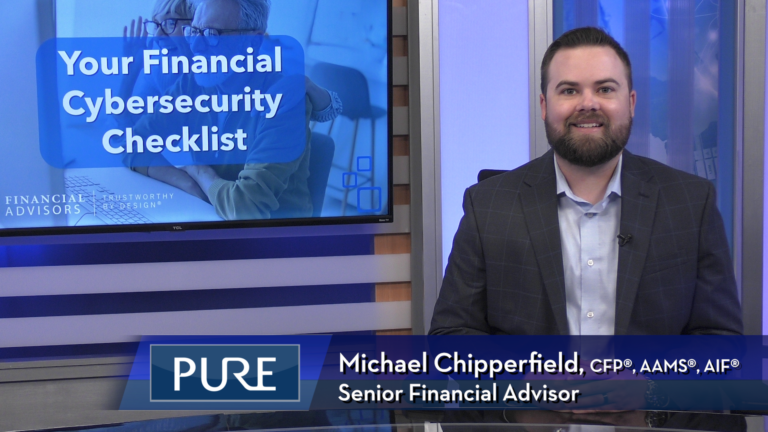
Pure’s Senior Financial Advisor, Sumit Mehta, CFP®, MBA, AIF®, reveals how to proactively protect yourself and your finances from scammers by recognizing red flags, building a strong defense, and responding if you think you’re being targeted.

Transcript
Scams aren’t what they used to be. Today’s fraudsters can clone a loved one’s voice, create convincing fake websites, and send messages that look exactly like they came from your bank. By knowing how to recognize the red flags, build a strong defense, and respond if you think you’re being targeted, you can proactively protect yourself and your finances from falling victim to scammers.
Let’s start with how to recognize the red flags. Most scams follow a familiar pattern, no matter how sophisticated they look. The first sign is urgency. You’re told your account has been compromised, a family member is in trouble, or you owe money that must be paid today. The second is an unusual payment request, such as gift cards, wire transfers, cryptocurrency, or payment apps. Legitimate organizations rarely ask for money this way. The third is secrecy. If someone tells you not to talk to anyone else, including your bank or your family, treat that as a warning.
Now let’s talk defense, and the most effective is also the simplest: slow down. Scammers rely on pressure to keep you from thinking clearly. If you receive an unexpected call, text, or email asking for money or personal information, hang up or close the message. Then contact the organization directly, using a phone number or website you already know is legitimate, like the number on the back of your card. The same goes for calls from family members in distress. Reach out to them, or someone close to them, on their usual number before you act.
There are also steps you can take today to make yourself a harder target. Turn on account alerts so you’re notified of transactions as they happen. Use strong, unique passwords and enable two-factor authentication wherever it’s offered. Never share a verification code with anyone who contacts you, even if they claim to be from your bank. Consider freezing your credit with all three credit bureaus, which helps prevent someone from opening new accounts in your name.
And with your family, consider agreeing on a private code word that can be used to confirm an emergency is real. Additionally, many financial institutions allow you to name a trusted contact on your accounts. This person can be contacted if something looks unusual, adding an extra layer of protection. It’s also worth having an open conversation with family about how scams work, especially with older relatives who are often targeted.
If you think you’ve been scammed, act quickly. Contact your bank or financial institution right away, change your passwords, and report the incident to the Federal Trade Commission at ReportFraud.ftc.gov. The sooner you act, the better your chances of limiting the damage.
Protecting your money starts with awareness. Take a moment to check out our Identity Theft Guide for more tips, and if you’d like a professional to review your financial plan, including how your accounts are protected, schedule a free assessment with Pure Financial Advisors today.
Subscribe to our YouTube channel.
IMPORTANT DISCLOSURES:
- Investment Advisory and Financial Planning Services are offered through Pure Financial Advisors, LLC, a Registered Investment Advisor.
- Pure Financial Advisors LLC does not offer tax or legal advice. Consult with your tax advisor or attorney regarding specific situations.
- Opinions expressed are subject to change without notice and are not intended as investment advice or to predict future performance.
- Investing involves risk including the potential loss of principal. No investment strategy can guarantee a profit or protect against loss in periods of declining values.
- All information is believed to be from reliable sources; however, we make no representation as to its completeness or accuracy.
- Intended for educational purposes only and are not intended as individualized advice or a guarantee that you will achieve a desired result. Before implementing any strategies discussed you should consult your tax and financial advisors.
CFP® – The CERTIFIED FINANCIAL PLANNER® certification is by the CFP Board of Standards, Inc. To attain the right to use the CFP® mark, an individual must satisfactorily fulfill education, experience and ethics requirements as well as pass a comprehensive exam. 30 hours of continuing education is required every 2 years to maintain the certification.
MBA – The Master of Business Administration (MBA) is a postgraduate degree that is awarded to students who have mastered the study of business. Most MBA programs include a “core” curriculum of subjects, such as accounting, economics, marketing, and operations, as well as elective courses that allow participants to follow their own personal or professional interests.
AIF® – The AIF® designation, administered by the Center for Fiduciary Studies fi360, certifies that the recipient has specialized knowledge of fiduciary standards of care and their application to the investment management process. To receive the AIF Designation, the individual must meet prerequisite criteria based on a combination of education, relevant industry experience, and/or ongoing professional development, complete a training program, successfully pass a comprehensive, closed-book final examination under the supervision of a proctor and agree to abide by the Code of Ethics and Conduct Standards. Six hours of continuing education is required annually to maintain the designation.