More
Joe Anderson, CFP® and Big Al Clopine, CPA spitball for three people planning for early retirement and wondering, can I really pull this off? How much risk can you take, and how much do you really need to? That’s today on Your Money, Your Wealth® podcast 588. Dr. Kickass Seabass and his wife are both 41 and they got a late start on savings. Can they still hit FIRE – that is, financial independence, retire early – by 55? Get your salt shakers ready. Aang and Katara have military pensions and a big thrift savings plan. Should they invest it aggressively or play it safe over the next decade? Finally, Steph has a mandatory retirement at 56 but wants out even sooner, at age 50… if his wife Ayesha doesn’t kill him first for quitting seven years before her.
Can you retire early at 55 (FIRE) if you have a high income but relatively modest savings?
Financial independence, retire early (FIRE) at 55 is possible with a high income and disciplined saving, but it depends on your target number, not just your salary. A common approach is to estimate annual retirement spending, adjust for inflation, and divide by a sustainable withdrawal rate to find the nest egg needed to bridge the years before Social Security.
Frequently Asked Questions
Q: How do I calculate the savings I need to retire early?
A: A common method is to estimate your annual retirement spending, adjust it upward for inflation over the years until you retire, then divide that figure by a sustainable withdrawal rate to get your target nest egg. For example, dividing inflated annual spending by a rate near 4% gives a rough savings goal. Retiring earlier raises that number, because the portfolio has to cover more years before Social Security and pensions begin.
Q: Does a pension count as part of my bond allocation?
A: Many planners treat guaranteed income like a pension as the fixed-income or “safe money” part of your overall financial picture. Because the pension reliably covers fixed expenses, you may be able to hold a higher percentage of stocks in your investment accounts than you otherwise would.
Q: How aggressive should my investments be 10 years before retirement?
A: There is no single standard allocation; it depends on how much you need from the portfolio for income. If your essential expenses are covered by pensions or other guaranteed income, you may be able to take on more risk. A common guideline is to hold several years of needed withdrawals in safer assets so you are not forced to sell stocks in a downturn.
Q: What is a safe withdrawal rate for someone retiring at 55?
A: A withdrawal rate that works at 65 may be too high at 55 because the money has to last longer. Rates above 5% can be aggressive for an early retiree, while a rate closer to 3.5% to 4% is often considered more sustainable, depending on your investments, spending, and market conditions.
Q: Should I move money to safe investments right before retirement?
A: Holding some safe assets near retirement can help protect against having to sell stocks after a market drop, which is known as sequence-of-returns risk. How much to shift depends on how much income you need from the portfolio versus what guaranteed sources like pensions and Social Security already cover.
Joe Anderson, CFP® and Big Al Clopine, CPA address something a not-insignificant portion of this audience has been complaining about for years: their so-called ‘absurdly conservative’ safe withdrawal rates for early retirement. Rand and Elayne from Ohio are here to gripe about it directly with a thought experiment: a million bucks at age 36 and a three-year sabbatical in France. When, if ever, would Joe and Big Al say they should cut it short and go back to work if the markets turned ugly? Mike2me17 piles on, with his own SWR take about AUM fees in his Apple Podcasts review. But first, a real-world example: Ron and Harry from Florida are elite performers with a high-risk specialty job. Can they safely pull off moving to Portugal and living on $38,000 a year in their early 40s? If you’re one of the people yelling at your podcast app every time Joe or Al mentions a 2% withdrawal rate, today’s your day.
Joe Anderson, CFP® and Big Al Clopine, CPA spitball for YMYW listeners in their 40s who are ready to call it quits at work, become financially independent, and retire early. Can they afford to do it? Peter and Joanna want to retire in the next two years. Burned Out and Ready to Retire wants out of his toxic office. If Maryland Chicken Man never earns another dollar, how much can he afford to withdraw from his retirement accounts each year? And Suzanne in Massachusetts is 69 and needs $60K a year for the next 30 years. Is she all right?
Mike and his wife in Tampa are 39 and 36, they’ve got nearly a million bucks saved. Are they on track for retirement? Kate in California is 55 and hopes to retire in the next couple of years. How should she manage deferred compensation and retirement withdrawals? Joe and Big Al also answer questions from our YouTube viewers on considering IRMAA when making Roth conversions, paying Roth conversion taxes quarterly or in December or in January, protecting a gifted house from a child’s ex, and the tax impact of rebuilding on an inherited property. Finally, 8 years ago, Joe and Big Al said you shouldn’t have more than 2% of your portfolio in gold, and one YouTube viewer said that did not age too well. What do the fellas think today? We’ll find out.
YMYW listeners in their 40s are ready to call it quits at work, become financially independent, and retire early. Can they afford to do it? Peter and Joanna want to retire in the next two years. “Burned Out and Ready to Retire” wants out of his toxic office. If Maryland Chicken Man never earns another dollar, how much can he withdraw from his retirement accounts each year? Plus, Suzanne in Massachusetts is 69 and needs $60K annually for 30 years. Is she all right?
You’ve had enough of the 9 to 5 and are ready to punch early. Are you financially prepared for a long and early retirement? Joe and Big Al provide a spitball analysis. And of course, the ever-popular Roth IRA conversions: how much to convert to Roth, when and how to pay the tax on a Roth conversion, and why not pay Roth conversion taxes out of the retirement account you’re converting from?
Subscribe to the YMYW podcast Subscribe to the YMYW newsletter
Question: I got out of the market after the pandemic hit. How do I know when to get back in? – Mark, Vista Watch the full episode, FIRE: Financial Independence or Fad? Make sure to subscribe to our channel for more helpful tips and the latest episodes of “Your Money, Your Wealth.”
Question: I was on track to retire this year, but I’m concerned about retiring now. My retirement account balances are down, so I don’t want to pull out the money to live on. Can putting off retiring for a year or two make a significant impact on my overall retirement funds or am I overthinking […]
While the FIRE Movement is not for everyone, there are concepts that we all can take from it to improve our own retirement: Don’t Wait – Plan for Retirement Now Try to Reduce Your Expenses Try to Increase Your Income Save, Save, Save & Invest Watch the full episode, FIRE: Financial Independence or Fad? Make […]
Even though most people could benefit from the FIRE Movement concepts it’s important to mention some rather large risks and pitfalls with retiring early. You may not have enough money with life changes Your professional skills may be diminished if you try to re-enter the job market The stock market may have a prolonged downturn […]
One of the best ways to increase your savings rate is to control what you can control – your spending. Here are a few basic pillars of the FIRE movement. Let’s see if you’re up for these: Low-Cost Housing Buy Used Cars Minimize Eating Out Use Travel Rewards Tax Optimize Add Income with a Side […]
You need to understand how to calculate the number of years it will take to reach financial independence. In traditional retirement planning, you tend to focus on a certain age to retire. With the FIRE Movement, you focus on how quickly you can become financially independent. Calculation Example: Years to Financial Independence (FI) Annual Expenses […]
A movement getting a great deal of attention on the financial channels is called Financial Independence – Retiring Early or FIRE. The concept requires that you spend significantly less than what you earn for a decade or two – and with compound interest, you could retire well before a typical retirement age of 65. In […]
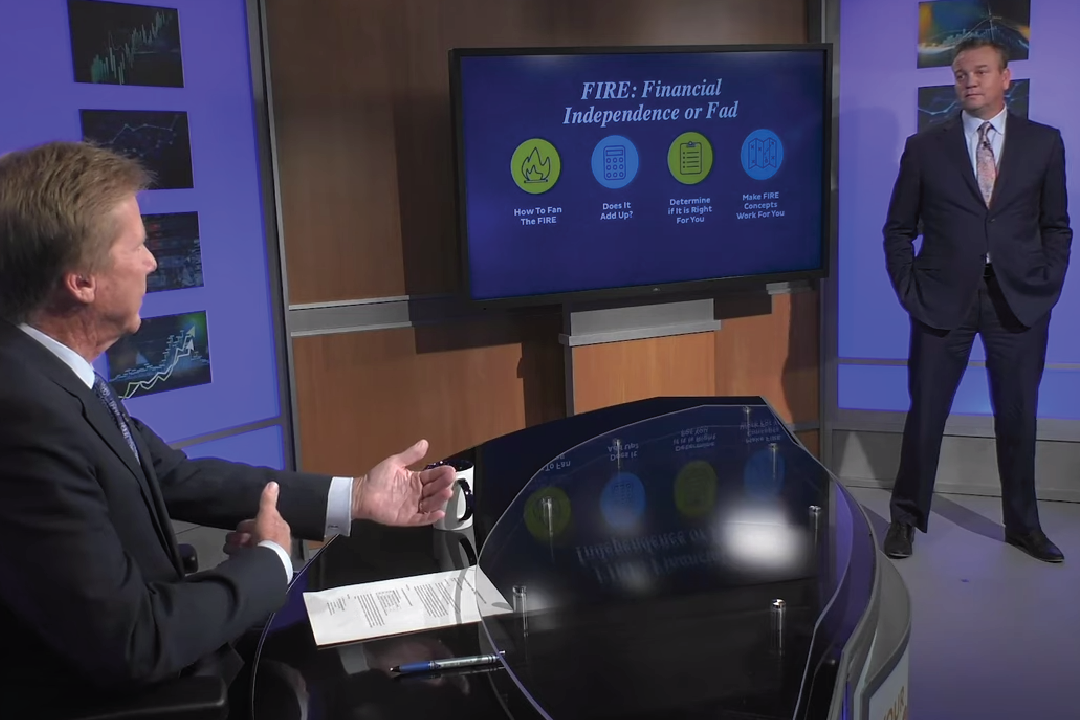
The FIRE (Financial Independence, Retire Early) movement is getting a great deal of attention on the financial channels and social media. This movement suggests if you can save the vast majority of the money you make early in your life and invest it aggressively, then you can retire after only working 10 to 15 years! […]