More Posts
Purefinancial

Paul and Angela in Florida are 52 and 45. What’s the earliest the two of them can walk away from work at the same time, so Paul can spend a whole lot more time in the boat? That’s today on Your Money, Your Wealth podcast...

Making contributions to Retirement Accounts is all about saving now so you can enjoy the retirement of your dreams later on. Now there are several different types of Retirement Accounts with unique features and benefits that may be right for your personal situation. It’s important to understand how they work, so you can choose the […]
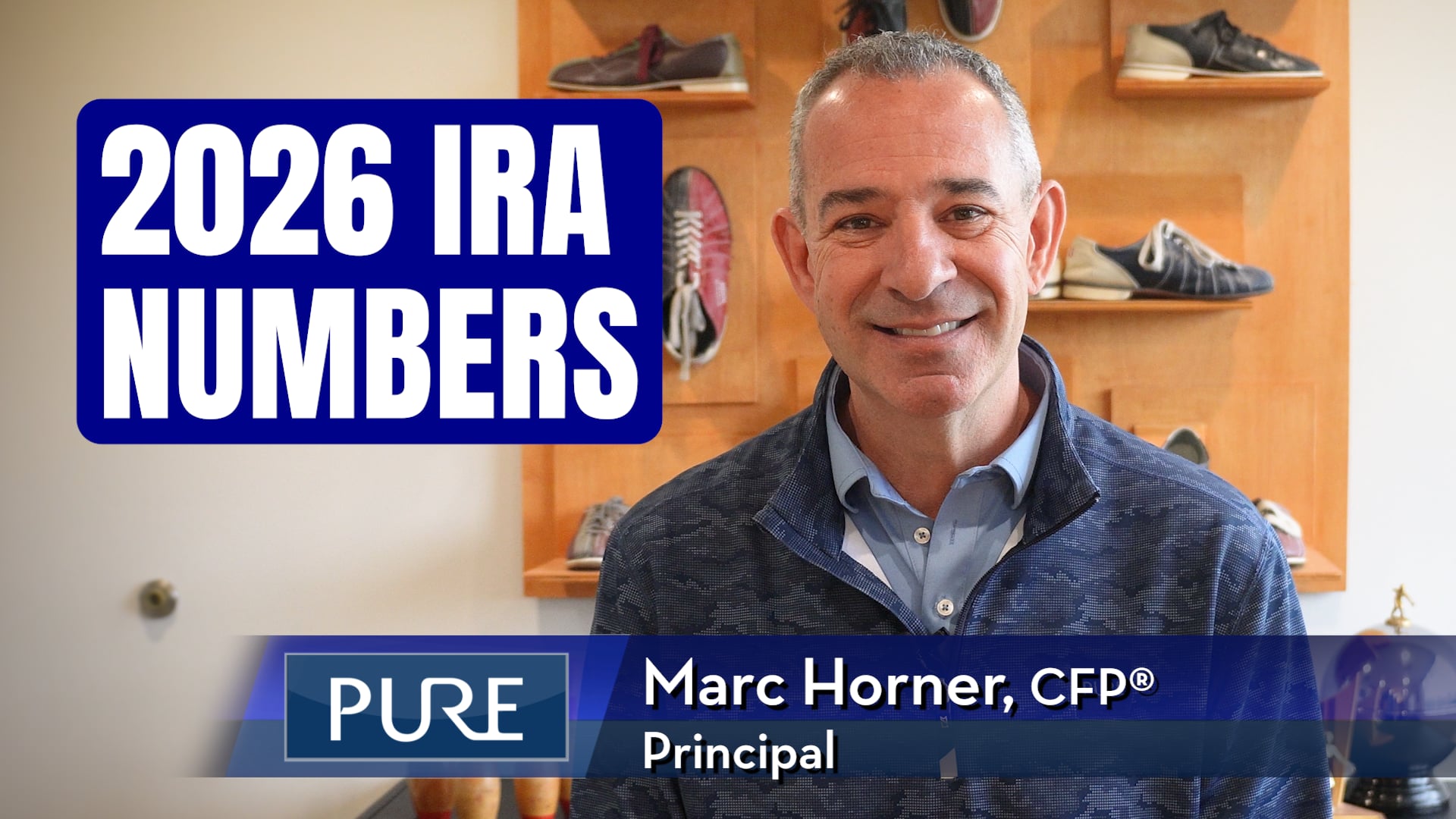
Pure’s Principal, Marc Horner, CFP®, identifies 2026 IRA changes, what they mean for you, and how to make sure you’re not leaving money on the table. Transcript Every year, the IRS tinkers with the retirement account rules. Most years it’s minor stuff — a tweak here, a threshold there. But 2026 has a few changes […]

Pure’s Senior Financial Advisor, David Cook, CFP®, AIF®, breaks down Roth and Traditional IRAs to help you navigate the nuances between these retirement accounts and identify which works best for you. Transcript If you ever tried to figure out the difference between a traditional IRA and a Roth IRA and which one you should actually […]

Updated for 2026: Making contributions to an Individual Retirement Account, otherwise known as an IRA, is all about saving now so you can enjoy the retirement of your dreams later on. One of the biggest advantages of an IRA is that your contributions (and any growth thereafter!) will grow tax-free. Now there are several different […]

McDreamy Dempsey wants to know if converting to Roth in the 37% tax bracket ever makes sense, and Gary in La Crosse warns Joe Anderson, CFP® and Big Al Clopine, CPA about Roth conversion “lag” and when it DOESN’T make sense to convert, today on...

One Big Beautiful Bill is now law. How does it impact your Roth conversion strategies and other financial decisions? Plus, you may have seen or heard other advisors talking about their strategies for getting your retirement savings into tax-free Roth accounts. How are these different...

Imagine being told you only have 12 months to live. What would you do with your time? Jonathan Clements returns to Your Money, Your Wealth® for his fourth appearance. For thirty years, Jonathan has been known for his personal finance writing: in his column “Getting...

Just about every week here on YMYW, Joe and Big Al talk about converting your retirement savings to Roth accounts. But why? What’s the big deal? Today the “IRA guru” Ed Slott, CPA returns to tell us why he calls the Roth IRA “the greatest...

Is it better to save for retirement in traditional 401(k)s and IRAs, or in Roth accounts? What are the rules around contributing to two different types of Roth accounts? If required minimum distributions will be staggered because of a couple’s age difference, should they convert...

As we continue marching towards a new year, there are several important things to keep in mind regarding your financial planning. These items may or may not make sense for you, but they are topics you should generally evaluate each year. Maximize Retirement Plan Contributions It is important to remember that while IRA and Roth […]

What is an exchange fund and is it a good thing if you have a lot of capital gains, like Bryan in New York? What should be the timing and ordering of Billy Joe and Bobby Sue’s Roth conversion strategy to help them achieve 33...

What does retirement at age 60 look like for Allison in Northern Virginia, or for YMYW listeners Jimmy and Rosalynn in Georgia, who are using our free retirement calculator at EASIretirement.com? Ingrid is using the EASIretirement.com calculator too – is she able to contribute more...

We’re revisiting your favorite Your Money, Your Wealth® topics and Derails of 2023 in this Roth and retirement investing mega-episode. Safe investing when you’re risk averse, mutual funds vs. ETFs, stable value funds, and estimating retirement income needs when you’re a young saver with a...

Your last-minute tax questions answered: should Brad in Wahoo, NE save to his regular 401(k) instead of his Roth 401(k) so he can claim the American Opportunity Tax Credit? Should Jennifer and Zeke in NY set up a Roth IRA and file taxes for their...